In 1979 a well-known Pateros resident – and likely self-identified town historian – Joan Wright Shupe prepared a booklet for the 40th anniversary of the Pateros High School graduating class of 1939. Titled A Mini History of Pateros (see 23), Shupe wrote that in 1913 when the Great Northern Railroad was being constructed through town, railroad company men became interested in the Pateros Methodist Church which was also being built at the same time (it was completed in 1914, the same year as the railroad). A result of that interest is rather remarkable for its historical significance – Shupe wrote that since the church was without a bell, the president of the Great Northern Railroad James J. Hill decided to give the church its first. The bell was used until it eventually cracked many years later and then became displayed on the church grounds. Perhaps more remarkable than this story is that the Okanogan County Historical Society has a single photograph in its collection dating to 1913 showing railroad men at work constructing the Great Northern line through Pateros and the Methodist Church in the background – lacking a bell!
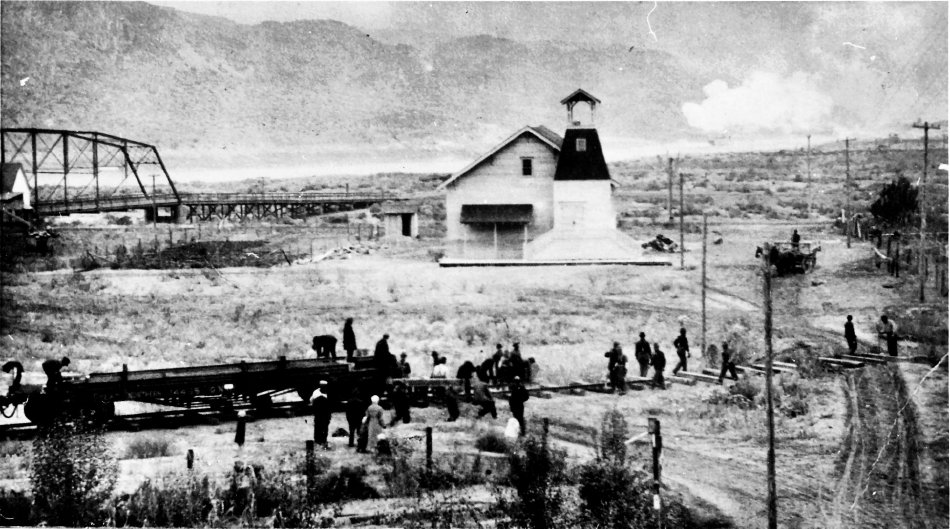
This story serves to highlight the importance of the railroad for Pateros and the Methow Valley. Apple growing occurred here prior to the arrival of the railroad, but apple growing was forever changed once the railroad arrived. One reason for these changes was that the railroad brought a new means of transportation for Methow Valley grown apples to reach U.S. markets more quickly – and hopefully more efficiently. For many years the railroad was plagued by issues that aggravated growers, mostly notably a lack of suitable refrigerator cars (using ice) to properly store apples for their long (and jarring) journey across the U.S. (15). The early railroad years did not have the advantage of mechanically controlled refrigerator cars so apple crates were often chilled with blocks of ice which needed to be consistently checked and replaced. Pateros even had an early ice company in downtown for this purpose. Railroads also controlled easements along their tracks which meant that they had a financial stake in orchards themselves, or more often, a stake and ownership of apple grading and packing warehouses and cold storage facilities. This is where cooperatives arrive.
Van Lanen writes (15) that one of the main benefits of being a member of an apple growing cooperative was that they often helped increase profits for members by creating larger networks of packing, storage, advertising, sale, and distribution. They also tended to decrease competition and create standards in quality control. For a town like Pateros, which fluctuated in total population around ~500 people for most of the early- to mid-20th century, cooperatives would have a large impact on apple sales. This brings us to the famous Methow-Pateros Growers Inc.
In 1903, Irvin H. Logue, and his wife Hester Davis, arrived in Pateros from Minneapolis. Logue is a somewhat mysterious character in the history of the Pateros and Methow Valley apple industry because of what little we know about his own personal history, interests, and pursuits. Born in New York in 1873, Logue’s 1944 obituary noted that he spent time in the “Klondike” during the Gold Rush years, likely between 1896-1899 (it is unclear exactly when he departed and returned). After returning to Minneapolis and marrying, he and Hester arrived in Pateros. In Pateros, Logue is most well-known for his connection to Methow-Pateros Growers Inc. or “MEPA”.
MEPA, according to different records, was organized and established sometime between 1915-1918. As described in the September 9, 1922, issue of Chicago’s The Packer, Methow-Pateros Growers Inc. began as a cooperative association of growers in 1916. However, Logue’s obituary notes that he “organized the Methow Pateros Growers association” in 1915. This is where the history of MEPA becomes complicated.
Thanks to surviving Articles of Incorporation on file in Okanogan County we know that the official ‘organization’ of MEPA – at least as the MEPA on paper that we knew it to be during the 20th century – occurred on June 22, 1918, with five original trustees listed as “I.H. Logue, Bert Stennes, J.D. Stanhope, Amos Tupper, and John Larrabee” (it is important to note that J.C. Steiner appears to have physically signed for John Larrabee). Thus, 1918 is the date of formal incorporation of MEPA in Okanogan County. And yet, Logue’s obituary indicates that he organized the “Methow Pateros Growers association” in 1915, and The Packer believed MEPA was organized in 1916. Official records do not entirely untangle this mystery.
For example, on March 11, 1911, James Ellingsworth, Irvin H. Logue, and Charles T. Borg filed Articles of Incorporation for the “Methow Valley Orchards Company” (unfortunately no digitized scan of these documents is available for review as of this writing). One month later, on April 7, 1911, the same group of trustees seemed to have filed new or amended articles with the signatories being John M. Ellingsworth, Irvin H,. Logue, James B. Willingsworth, and Charles T. Borg, again, for the “Methow Valley Orchards Company”. The “Methow Valley Orchards Company” does not seem to have existed for very long as no further evidence of this orchard company appears in various records – but the involvement of Logue in 1911 is intriguing.
I suspect that while we should consider 1918 the ‘formal’ date of incorporation for MEPA, at least on paper, the origin of this association and cooperative seems to have fluoresced at least several years prior. This likely explains why Logue’s obituary noted 1915 as the start, The Packer noted 1916, and the formal articles dated to 1918. MEPA existed in Pateros and the Methow Valley as an idea long before being put to paper. The 50th anniversary of MEPA helps support this interpretation.
As described in the November 27, 1968, issue of the Okanogan Independent, “[a]t the time of its incorporation back in 1918, the group had already functioned as a unit for several years” (emphasis added). This seemingly confirms that MEPA did begin earlier than 1918. This anniversary article is also important because it reinforces the significance of MEPA to the community, noting that the early directors of MEPA signed personal notes to secure early loans to help finance the cooperative. They (MEPA) were also one of the first cooperatives to “realize the importance of refrigerated storage and led the field in cold storage construction”. And, in the 50-years of MEPA up until 1968, the cooperative had only known three managers – I.H. Logue, M.D. Armstrong, and Clark Copple (see more below). Praise of MEPA in the article goes on.
Coincidentally, it is important to note that the Methow-Pateros Unit of the Wenatchee-North Central Washington Growers’ League was signed into existence on February 9, 1915, by W.A. Bolinger, J.D. Stanhope, George E. Starr, H.E. Mintzer, and W.V. Tukey. Clearly, the 1910s were a busy decade for growers in Pateros and the Methow Valley.
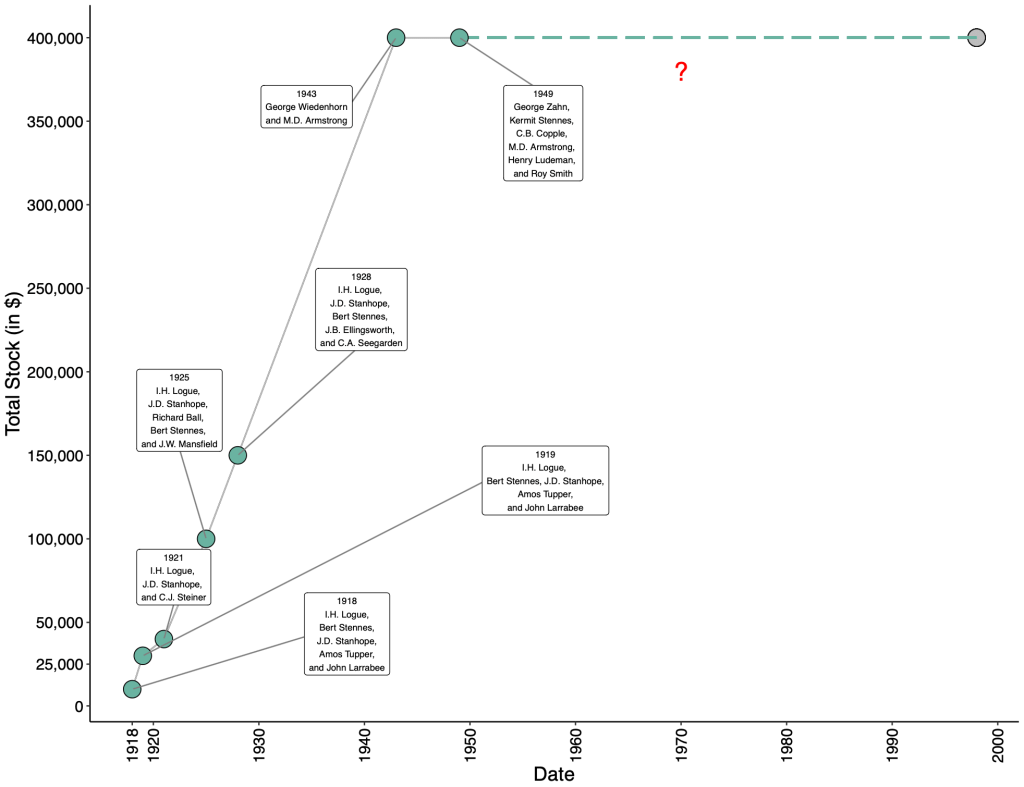
One visualization (see below) helps highlight the tremendous growth of MEPA throughout the early part of the 20th century. When MEPA incorporated in 1918 it had $10,000 in stock. By 1925, it’s stock value had increased to $100,000, and by 1949 (the last date where known records exist), the value had increased to $400,000. And, as previously noted by the Okanogan Independent, MEPA’s managers and board of directors remained dedicated and consistent throughout this period, no doubt helping their community of growers survive war, the Great Depression, floods, frost, and much more.
As described in the September 9, 1922, issue of Chicago’s The Packer, Methow-Pateros Growers Inc. – also known as “MEPA” – began as a cooperative association of growers in 1916. F.H. Logue was one of the founding members and was the cooperative manager for many years. It is unclear exactly how many individual growers participated and worked with MEPA, but it is fair to guess that many Pateros and Methow Valley families stored and sold their apples under the brand at any one time.
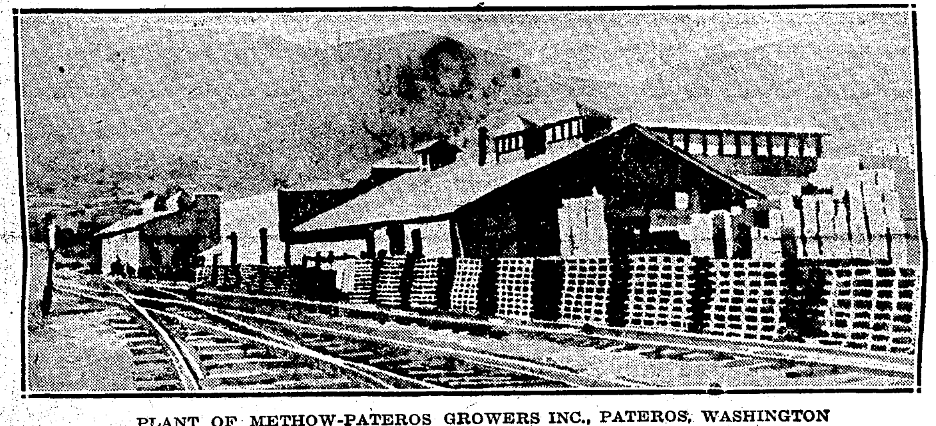
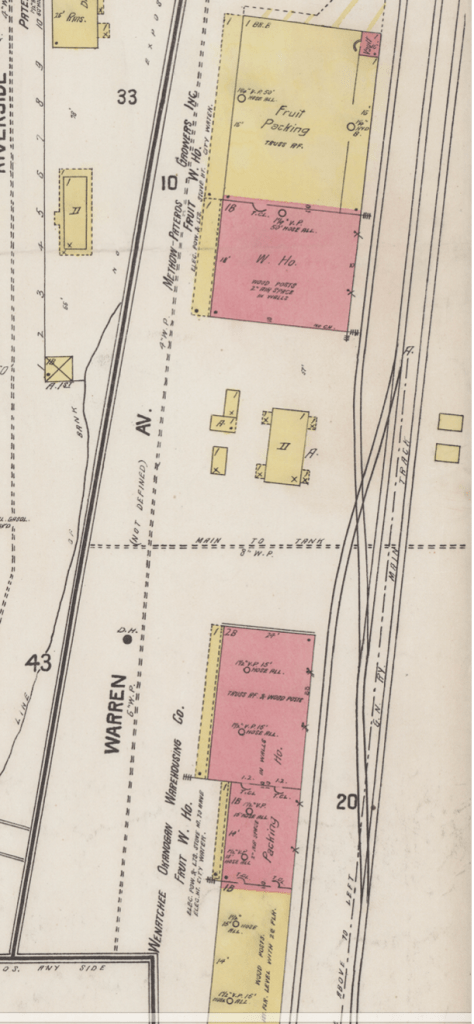
Maps of Pateros in 1918 and 1922 highlight that the town had several existing packing, grading, and storage warehouses downtown. Three known in 1922 included the Beebe-Pateros Warehouse Company (as previously noted), Methow-Pateros Growers Inc., and the Wenatchee-Okanogan Warehousing Company.
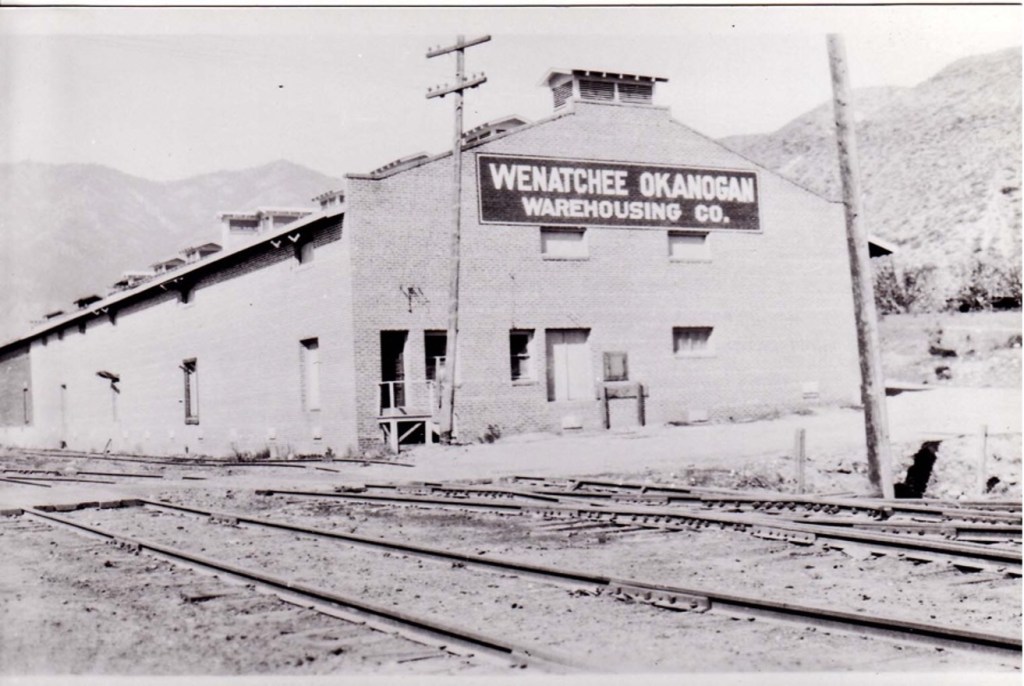
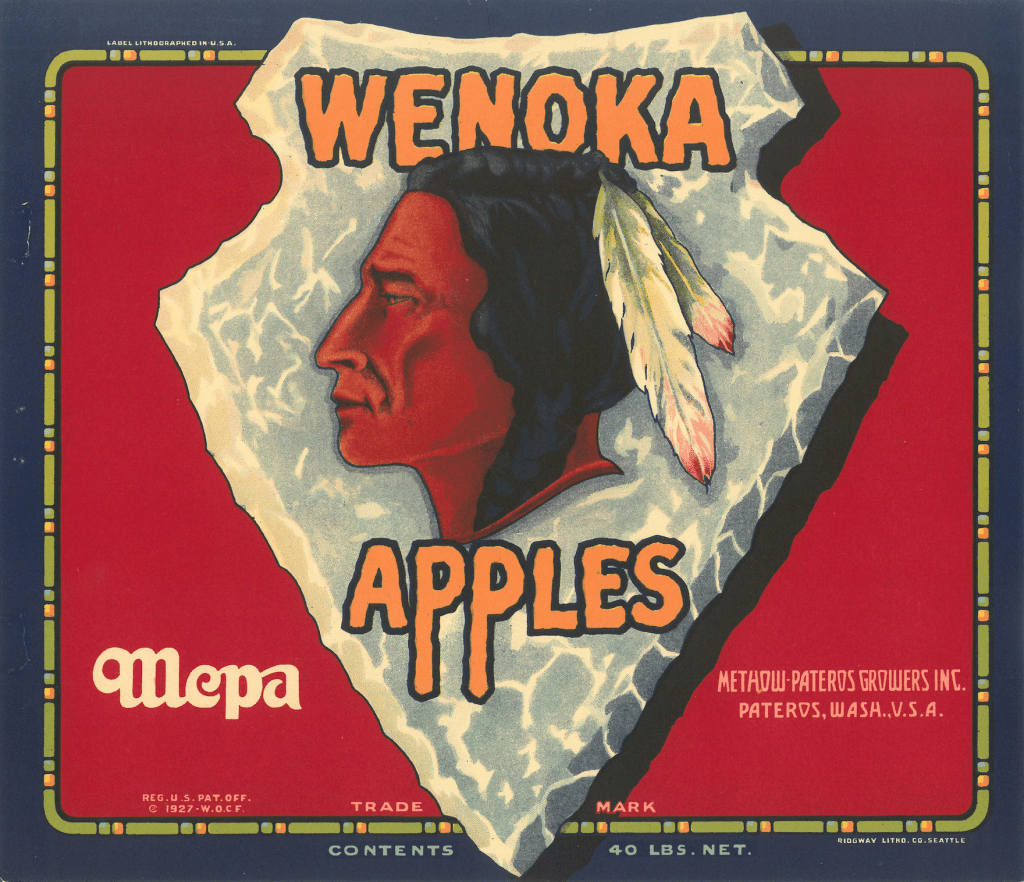
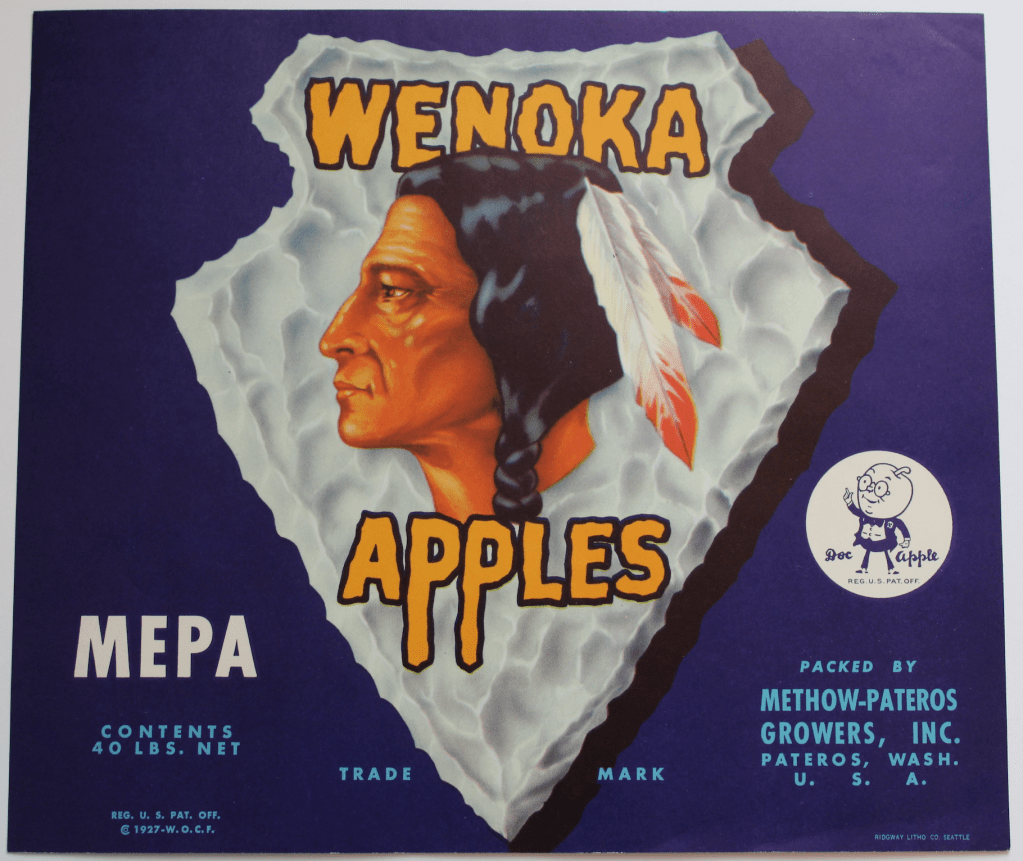
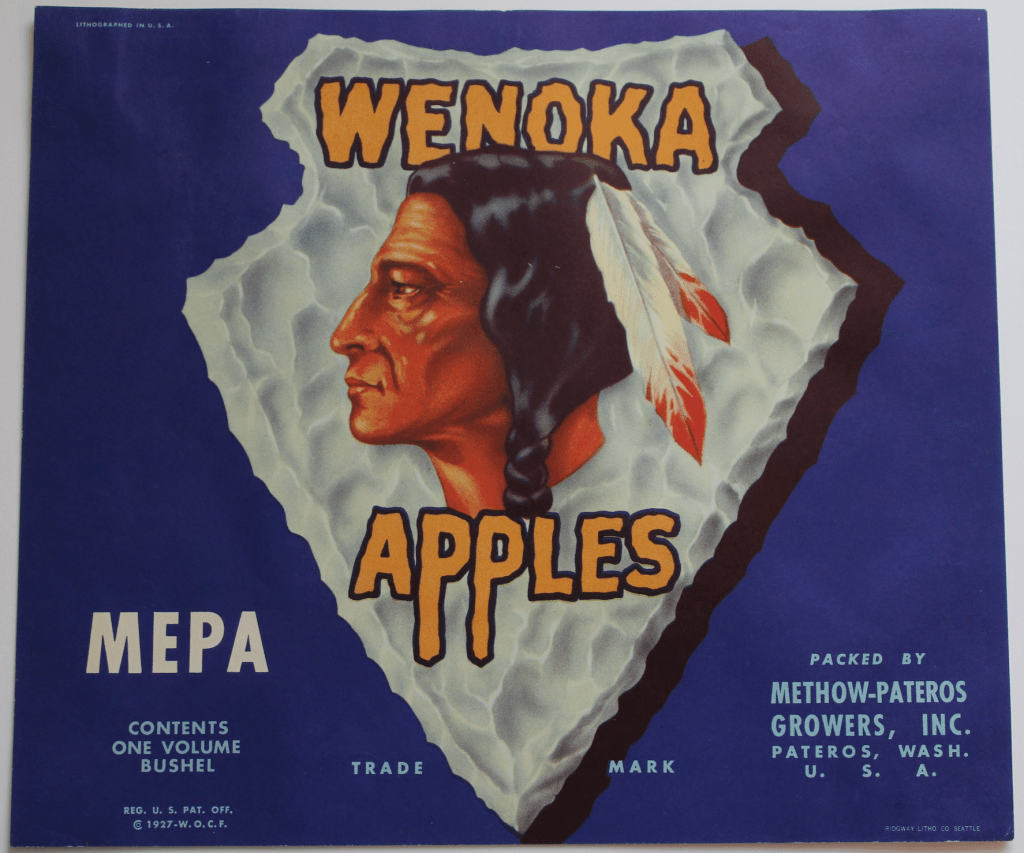
The history of each of these cooperatives is complex because various associations would sell apples under their own brand, as MEPA did, but would also join with other advertising companies or cooperatives to sell fruit under joint brands. They also tended to use name variations which easily leads to confusion today. Take for example the Wenatchee-Okanogan Warehousing Company. The Yakima Valley Museum has an extremely rare apple label in their collections with a yellow background, a red apple on the side, and a megaphone with text coming out of the megaphone stating “WOW Brand” apples which were packed and shipped by the “Wenatchee Okanogan Warehousing Co.” in Pateros (16; see also figure below). But, this apple brand and the warehouse itself was not associated with the 1922 establishment of the north-central Washington cooperative based in Wenatchee called the, “Wenatchee-Okanogan Co-Operative Federation.” A brand we know today as “Wenoka”. To make this more confusing, Wenoka branded apples, from their establishment in 1922, included a relationship with MEPA. Essentially, Methow-Pateros Growers Inc. apples were sold jointly under a MEPA and a Wenoka brand/label. Often the Wenoka image was added to standard MEPA labels. An August 1922 The Packer newspaper page helps visualize the various brands that sold with Wenoka – including different MEPA apple labels for various grades.
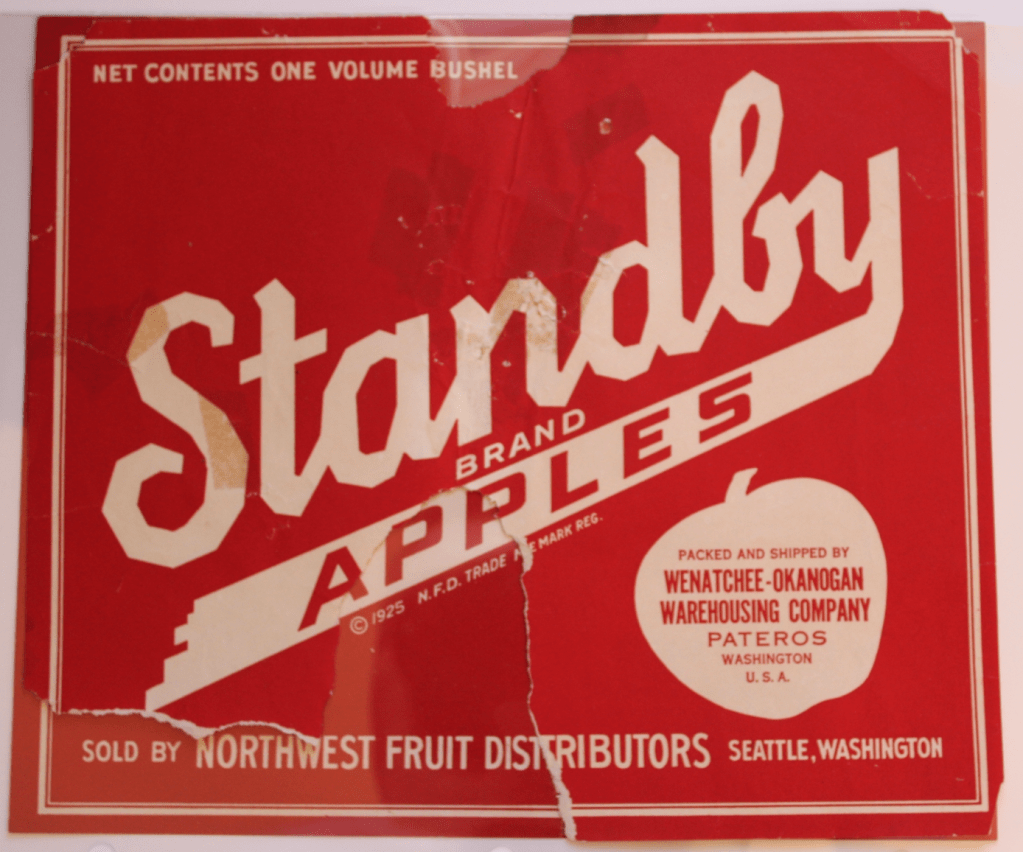
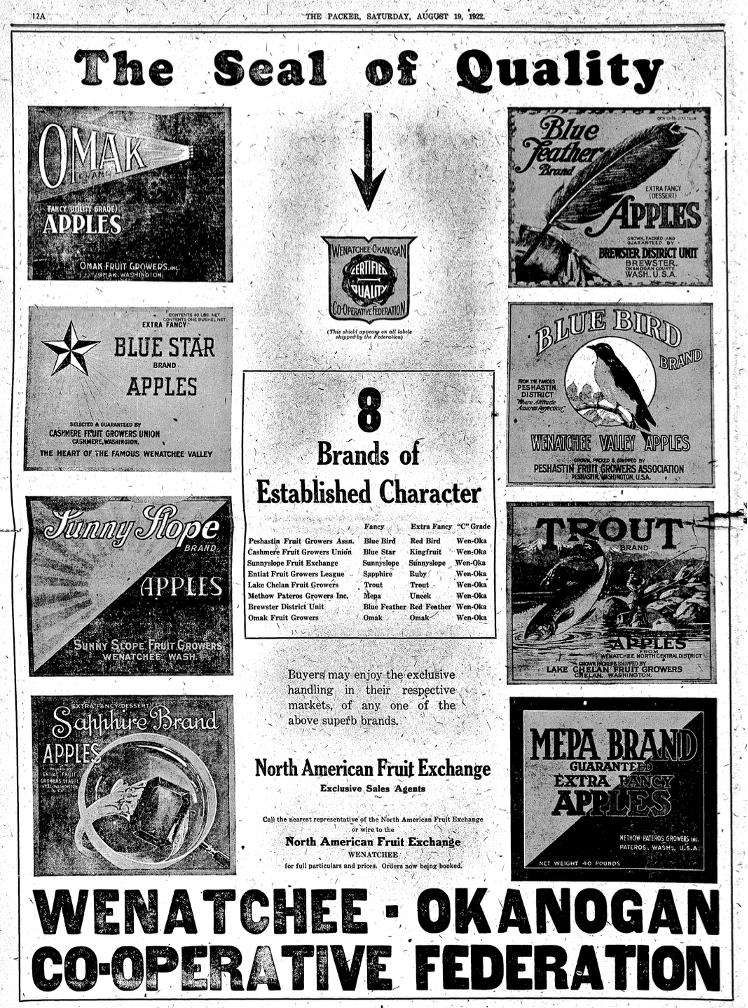
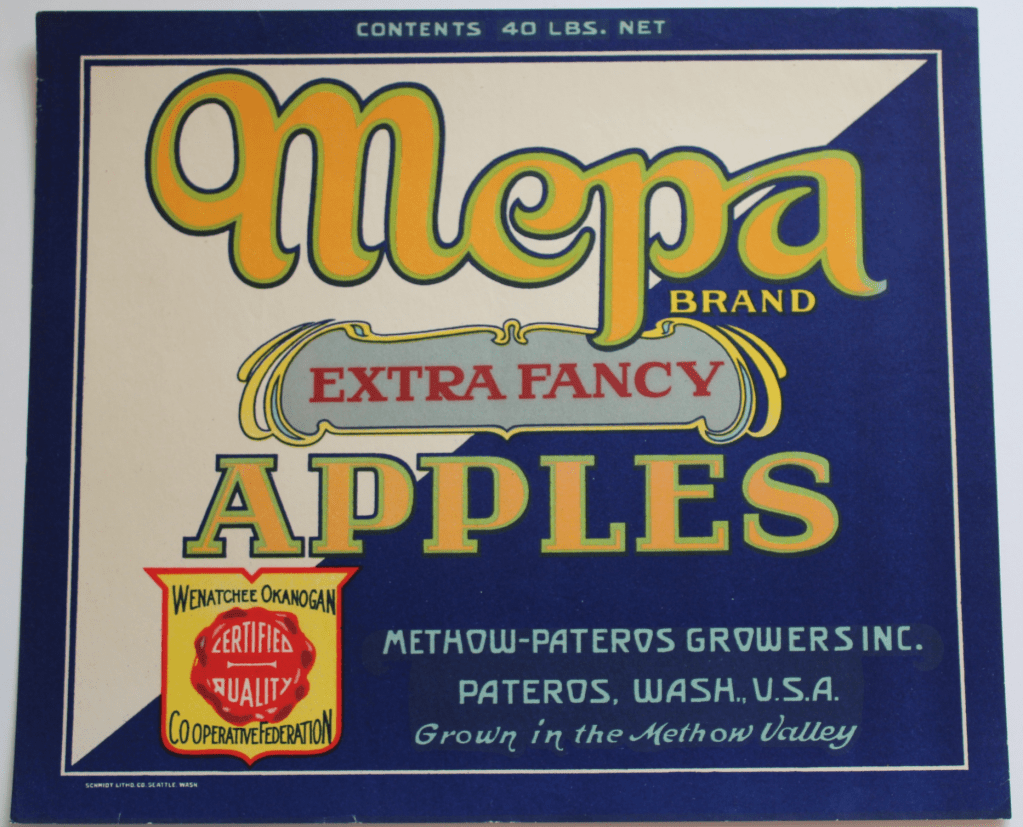
For Methow-Pateros Growers Inc., their standard apple labels included variations of the text “MEPA Apples” with a square, diagonally bisected by two different colors. They also sold different grades of apples under the “U-Neek” brand, which used the same square shape with different colored sections. Apples sold with Weonka included the Wenoka brand symbol on the label as well – and in contrast, Wenoka labels were also created that used their advertising imagery along with the text “MEPA” apples, indicating that pack came from Methow-Pateros Growers Inc. Examples of this imagery are shown below.



While MEPA continued to operate throughout the 20th century (more on that shortly), the same is unfortunately not true for the Wenatchee-Okanogan Warehousing Company. Although it is unknown exactly when the company ended their operations, it likely occurred in the late-1920s, 1930s, or early 1940s. Interestingly, one Larrabee and/or Neff “Met-How” label indicates that apples were sold with the Wenatchee-Okanogan Warehousing Company at one time (see Growers section “Guaranteed” label). One telling Western Telegram record in the Great Northern Railroad archives was from the Wenatchee-Okanogan Warehousing Company to the President of the Great Northern on October 14, 1920, and stated:
“WAREHOUSE FULL OF APPLES SPUR NOT COMPLETED CANNOT THIS BE RUSHED”
Space for warehouses and spurs to connect those facilities to the railroad were critical for associations and other growers and distributors during these early days.
Fire insurance maps for Pateros from 1922 include the Wenatchee-Okanogan Warehousing Company, but by 1945 their warehouse was listed as being owned by the Beebe-Pateros Cold Storage Company. Remember that in 1925 John Larrabee and his colleagues purchased the original Beebe warehouse in Pateros, but Great Northern Railroad records confirm that by 1931 Beebe had revitalized their packing and storage warehouse operation and returned to Pateros. The 1945 fire insurance map for Pateros also includes one new apple packing and cold storage association called, “Methow Valley Service, Inc.” – this was the association managed by J.L. Cooper for many years.
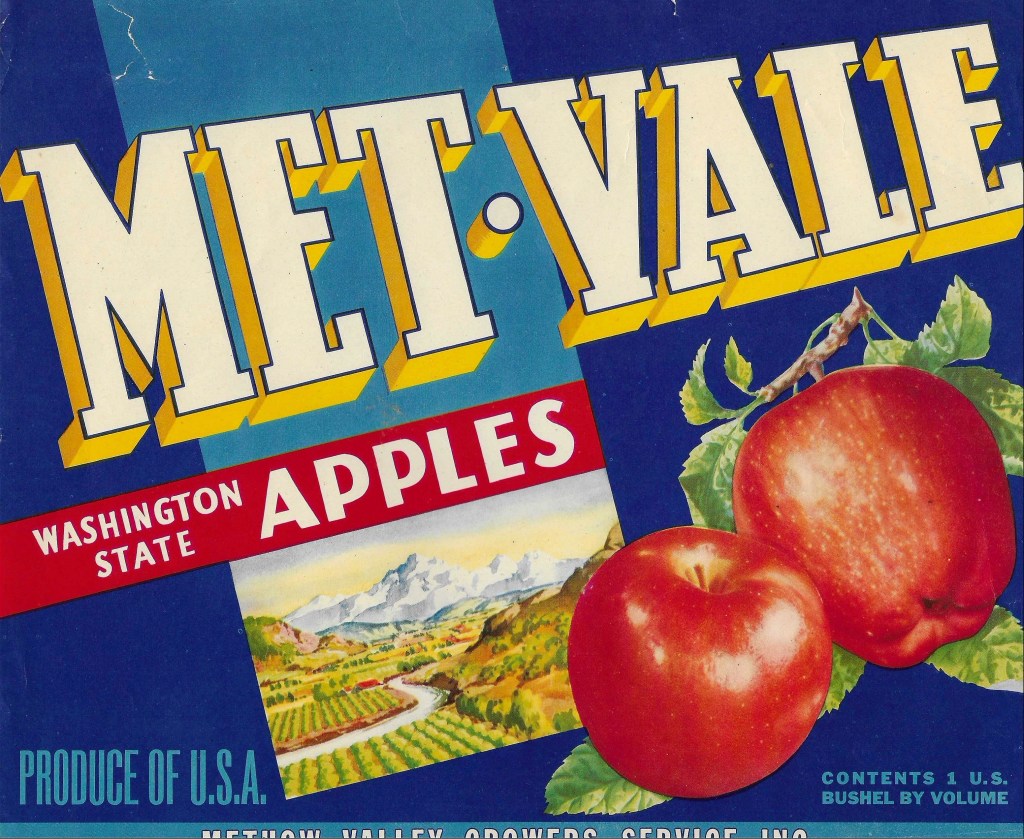
This “Methow Valley Service, Inc.” association sold apples using a well-known, albeit rare, apple label which reads, “Met-Vale Washington State Apples” in text across the front with a blue background, red apples, and an agricultural scene in the background. The association name was printed as the “Methow Valley Growers Service Inc.” – which is undoubtedly the same association. Interestingly, articles in the May 30, 1957, and March 22, 1962, Quad City Herald reporting on local companies supporting the Pateros High School and its graduates listed sponsors including Methow-Pateros Growers, Inc. (Pateros), Methow Valley Growers Service, Inc. (Pateros), Larrabee and Neff (Pateros), Methow Packers, Inc. (Methow), Starr Ranch (Pateros), and an orchard further south along the Columbia River, A.Z. Wells Orchards (Azwell). Sponsors also included the Brewster Co-Operative Growers and Mutual Apple Growers (also in Brewster).
Aside from MEPA, the Wenatchee-Okanogan Warehousing Company, and the Methow Valley Growers Service, there were several other associations that helped market and sell Pateros and Methow Valley apples throughout the United States and elsewhere. An extremely popular and well-known association was the Northwest Fruit Exchange in Wenatchee which sold under the “Skookum” brand, and many associations (and individual growers) worked with Skookum for their advertising, sales and distribution (see 26). As noted for the Smith Orchards, the association called Nuchief also marketed and sold apples throughout north-central Washington, as did Paul Thomas’ Oneonta Trading Corporation and another cooperation called American Fruit Growers. The headquarters for nearly all of these associations was Wenatchee, but they built broad networks of growers, and grower-affiliated associations, to market and sell apples. Apples sold under Skookum, Nuchief, Oneonta, American Fruit Growers, or others, all had characteristic apple labels – several examples of which are shown below.

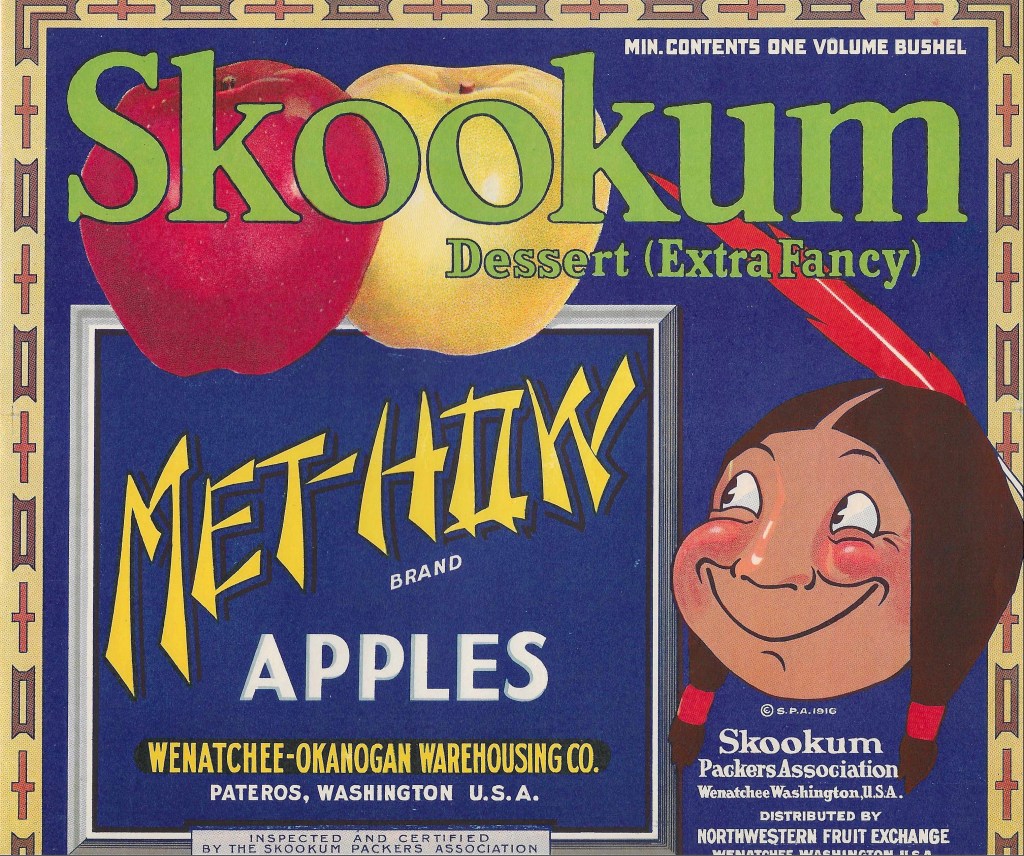
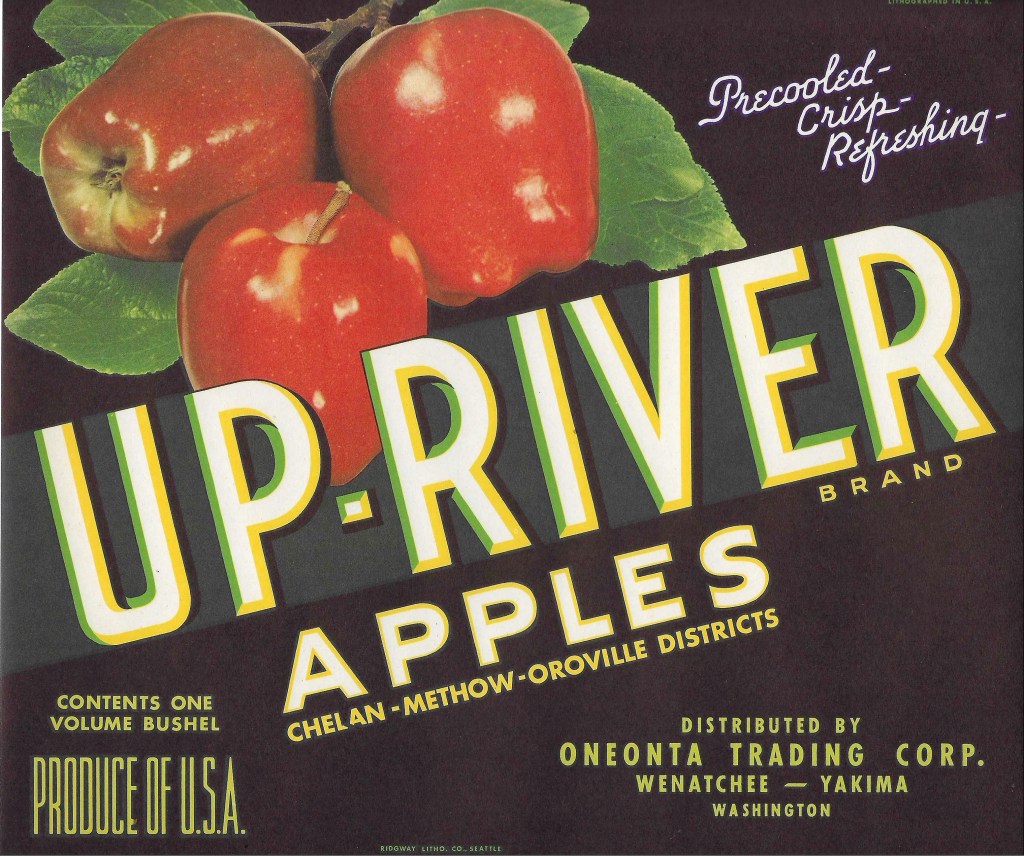
For Pateros and the Methow Valley, the importance of Methow-Pateros Growers Inc. cannot be understated. It was a hallmark of town – the warehouse was affectionately known as “The Unit” – and numerous families either stored and sold apples with MEPA, or simply kept jobs and worked at MEPA.
One memorable legacy of MEPA in Pateros is that of the warehouse’s manager for 37 years between 1947 and 1984 – Clark Copple. Born and raised in Omak, Copple began working in the apple industry in 1937 as a bookkeeper for Omak Fruit Growers (Wenatchee World November 19, 1984). One year later his father passed away from a tractor accident and Copple began running the family orchards as well. At the onset of World War II, he joined the U.S. Army Air Corps and later returned home in 1944 at which time he became the manager of Omak Fruit Growers (see figure below). Copple managed Omak Fruit Growers until 1947 when he left and began managing MEPA.
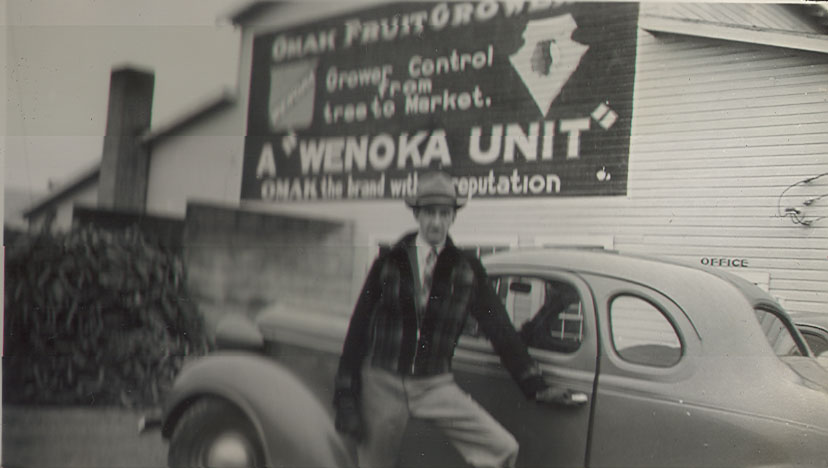
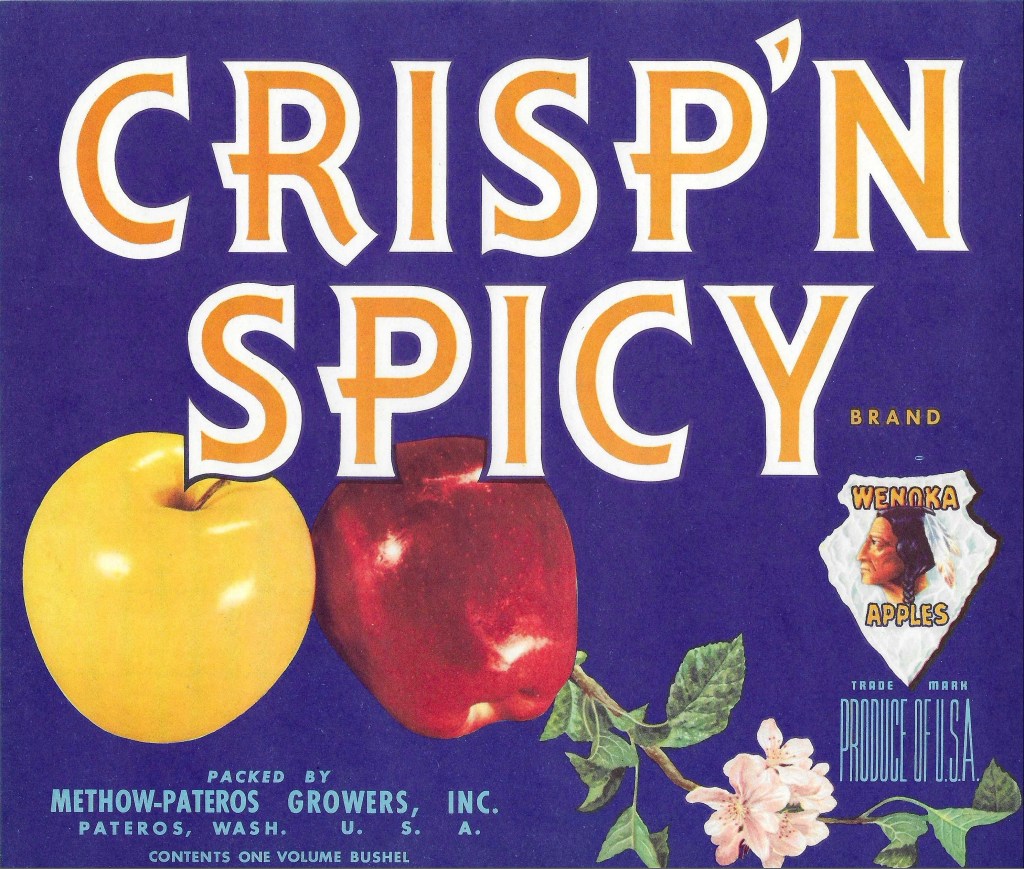
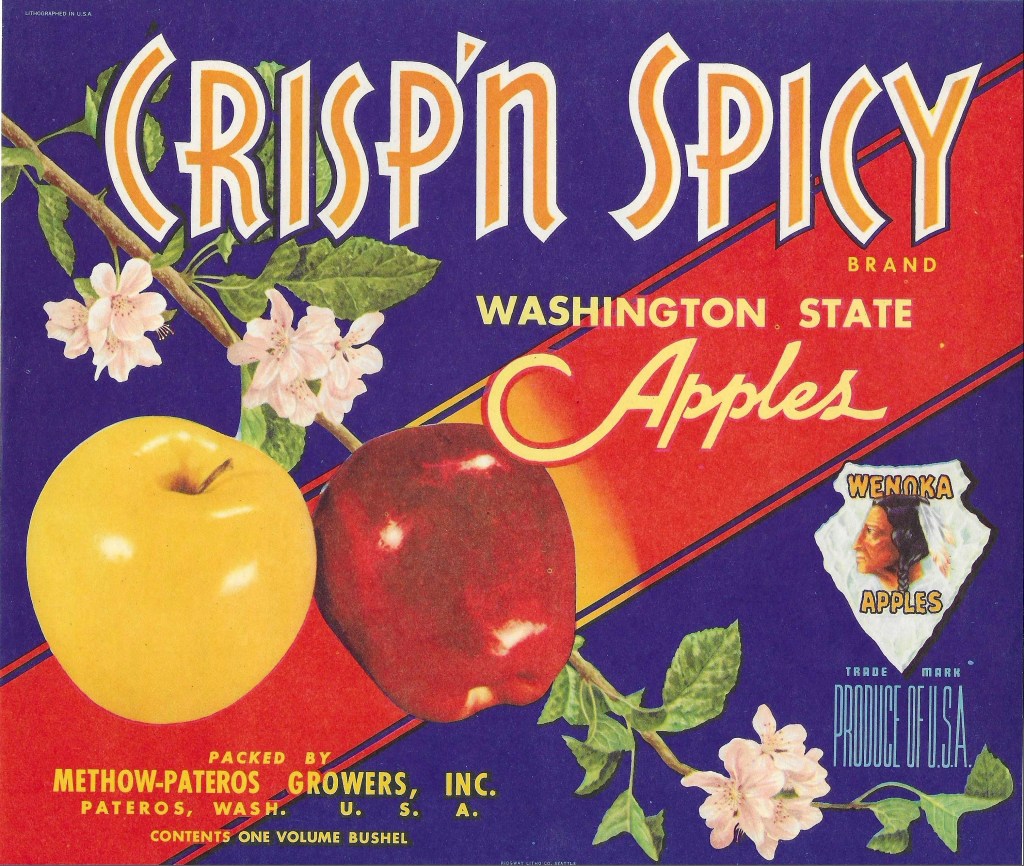
Copple managed MEPA through several periods of significant change. At some time during the 1930s or 1940s MEPA transitioned and began selling under the brand name “Crisp’N Spicy” – a change which likely occurred under M.D. Armstrong’s or Copple’s tenure and that of the MEPA president, George Zahn. One Omak Chronicle article from December 16, 1954, noted that during the 155,000-box run that year, MEPA housed three grading machines and washers with two being used in 1954 employing 17 sorters and 36 packers with Copple managing. Copple also helped MEPA through several challenging periods, including the flood of 1948 (which was his first year on the job!), the inundation of the original MEPA warehouse and construction of a new warehouse because of the completion of Wells Dam in 1966-1967, and the deep freeze of 1968 which ruined numerous orchards in Pateros and the Methow Valley. Only four years before Copple retired, he also managed MEPA through the infamous December 6, 1980, fire which destroyed their cold-storage warehouse facility.
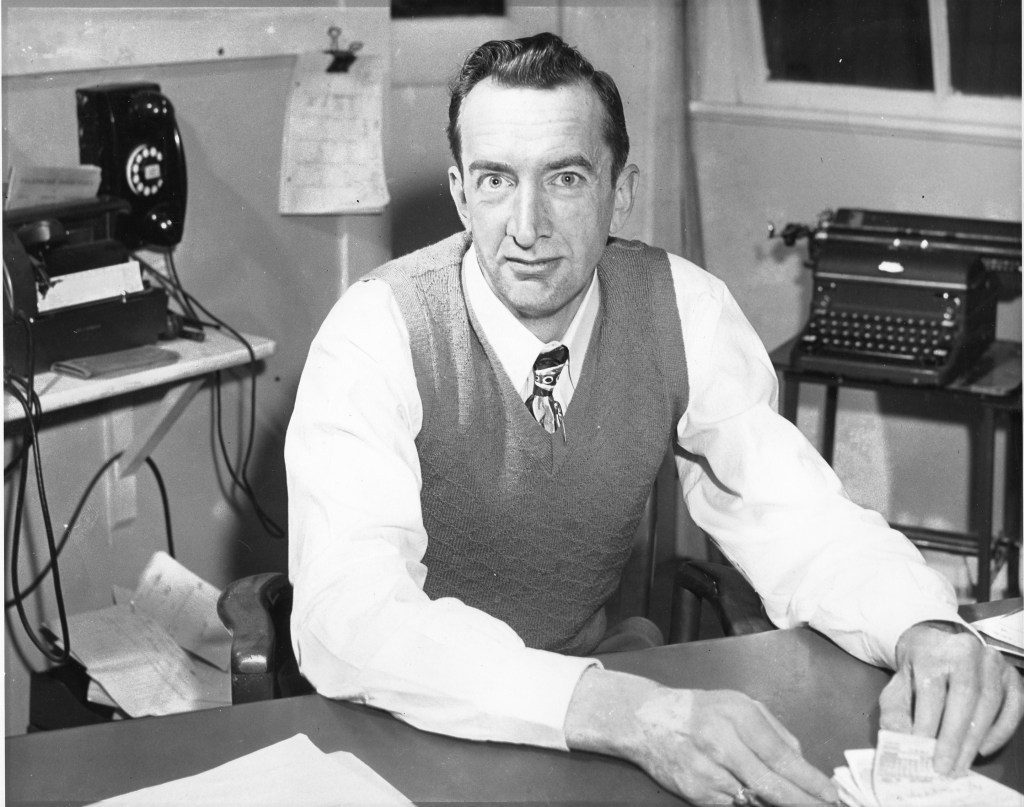
As Clark’s son and daughter have shared for this research, Copple was a fixture in Pateros both because of his well-known management of MEPA, but also because of his endless kindness, respect for his growers and the community, and devotion to the apple industry. Copple served for many years on the Pateros town council.
Old Pateros newspapers reflect the tight-knit nature of MEPA and the community during this time. The Omak Chronicle reported on December 28, 1950, that all of the MEPA growers enjoyed their annual turkey dinner at the Legion Hall after running 415,971 packed boxes for the 1950 season, “The dinner was served cafeteria style with workers from the shed helping to serve the 250 guests seated at the decorated tables. Roy Billingsley of the Hi-Way Cafe was in charge of cooking the dinner. Ed Heath was toastmaster and Clark Copple guest speaker.”
Another story comes from Christmas Eve, December 24, 1958, when a group of Pateros Legionnaires loaded a truck full of apples from various Pateros growers and delivered them to veterans in Spokane. The Herald-Reporter article noted that 330 boxes of apples were disturbed to veterans at the Spokane Veterans Hospital, and other various rest homes and hospitals in Spokane and Medical Lake. The Spokane Legionnaires helped distribute the apples. Boxes of apples were donated from the Smith Orchards, MEPA, Methow Valley Packers, Starr Orchards, Methow Valley Growers Service, and Wells packing houses. A photograph of the group taken at the Herald-Reporter offices in Brewster on their way to Spokane is replicated, below.

One full-page newspaper spread published by Wenoka in the May 3, 1967, Wenatchee Daily World, also noted that one of the charter members of Wenoka was MEPA – and that in 1967 MEPA included 33 growers shipping 275 carloads of apples and pears annually with “new packing and storage facilities this season” (due to the inundation from Wells Dam). A 1962 photograph also published in the Wenatchee Daily World showed the Pateros-area delegates to the 1962 Washington State Horticultural Association convention in Yakima (see figure below).

But, during the late-20th century MEPA ultimately ended as it was sold and aggregated into a different association. The history occurred like this:
1918 – Methow-Pateros Growers Inc. formed in Pateros, WA.
1937 – Brewster Cooperative Growers Inc. formed in Brewster, WA.
*At some point during this era, Methow-Pateros Growers Inc. begins selling apples under a new brand name called “Crisp’N Spicy”.
1947 – Mutual Apple Growers Inc. formed in Brewster, WA.
1967 (or 1969) – Brewster Cooperative Growers and Mutual Apple Growers merge to become the “Brewster Mutual Growers Association”.
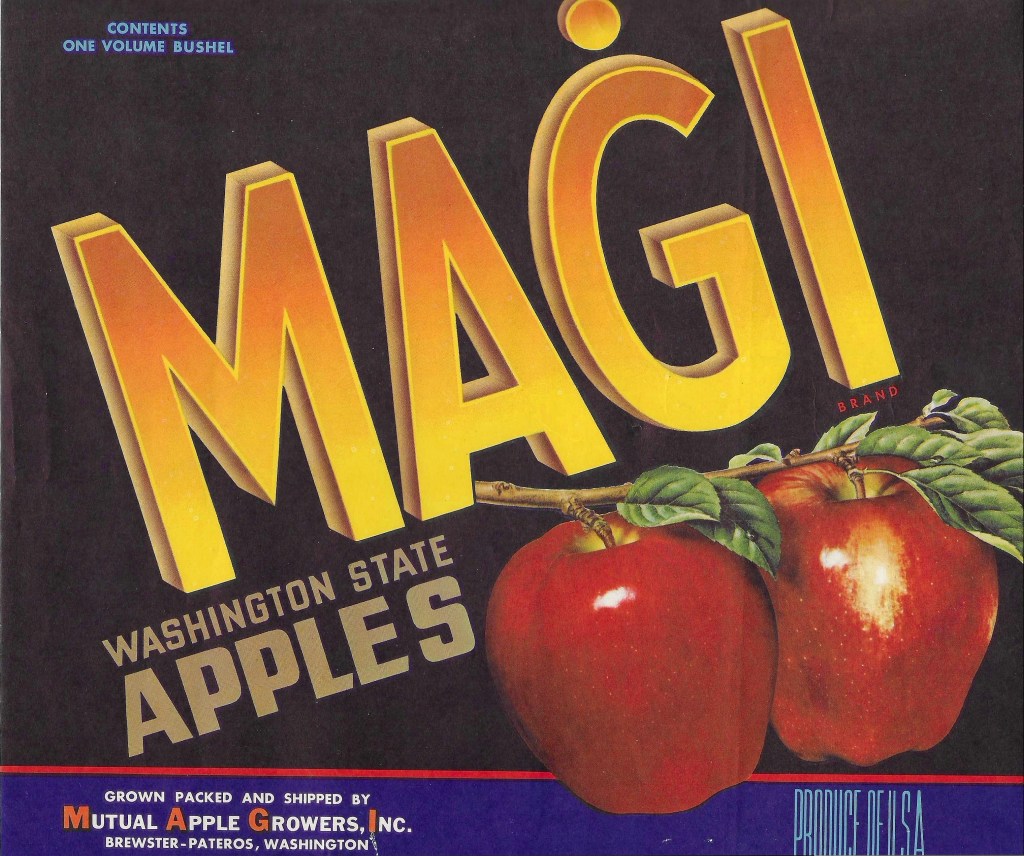
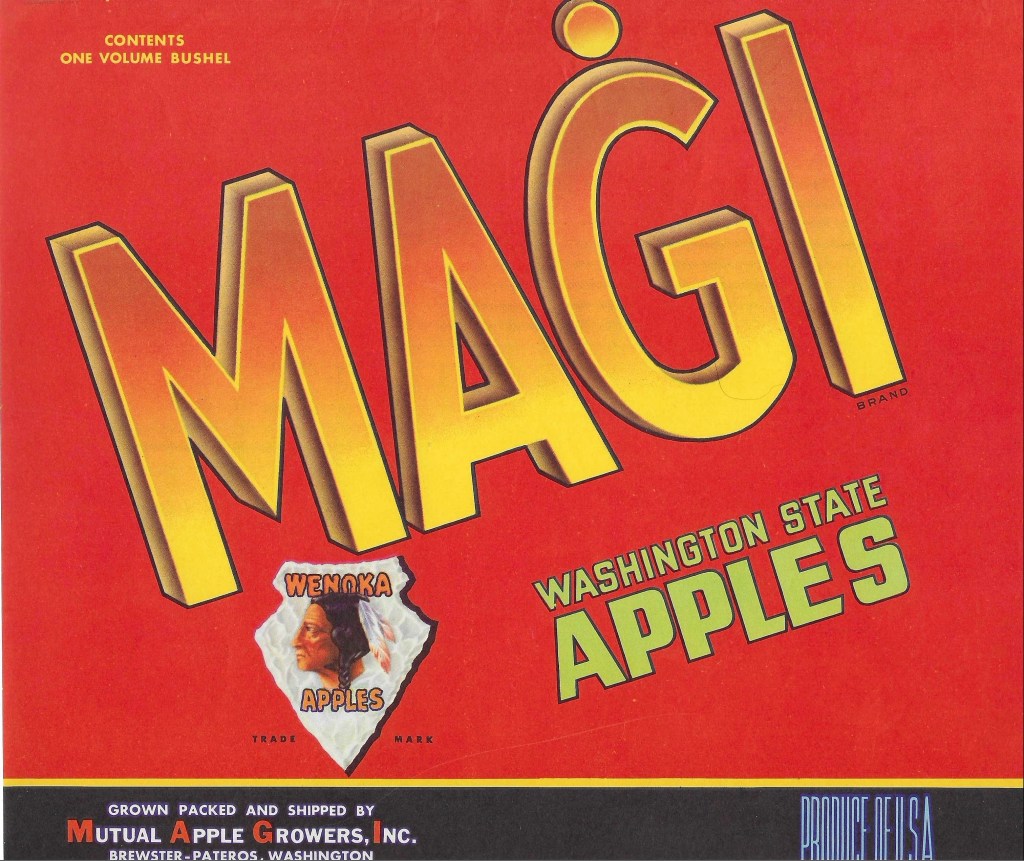
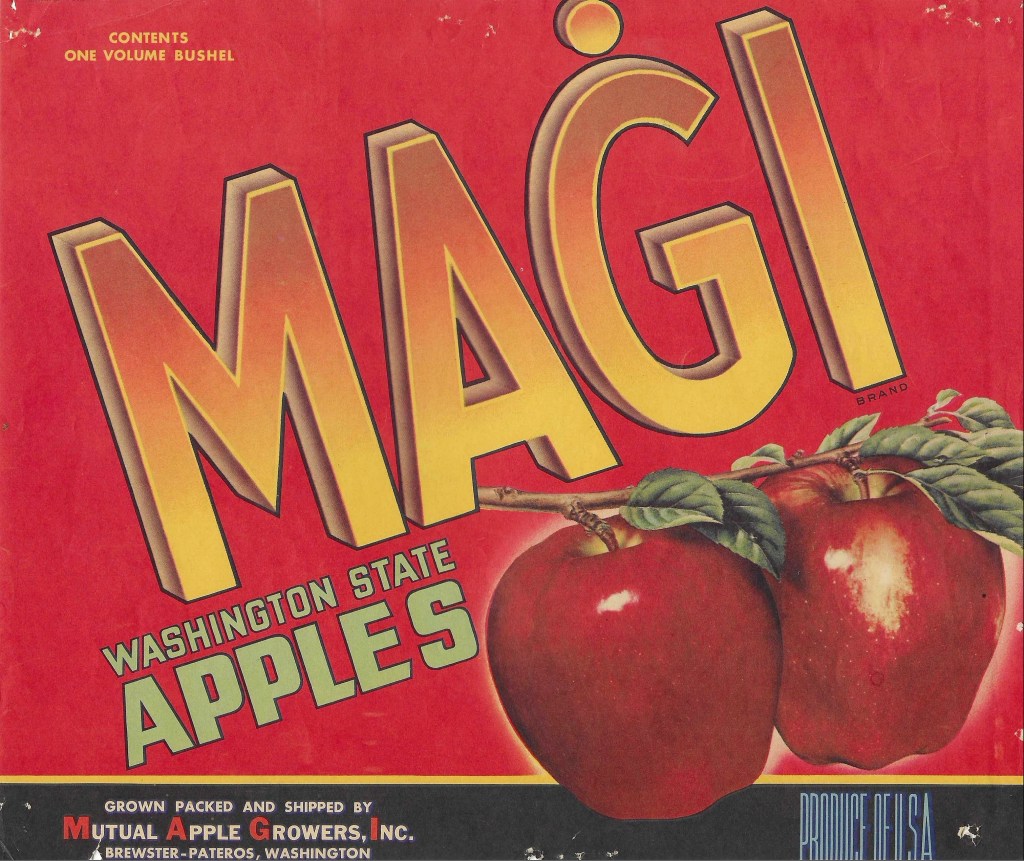
1973 – A fire destroys the Omak Fruit Growers facility and they decide to merge with the “Brewster Mutual Growers Association,” but since that acronym became BMGA, they collectively decided to be called “MAGI” which stood for “Mutual Apple Growers, Inc.
1980 – A fire destroys the MEPA cold storage warehouse in Pateros.
1998 – MEPA (selling as Crisp’N Spicy), sells and merges with MAGI, which results in the end of the Methow-Pateros Growers Inc. brand after ~80 years in business.
2004 – MAGI merges with Trout-Blue Chelan (Trout Inc. and Blue Chelan Inc. had previously merged in 1995) with a new conglomerate name of “Chelan Fruit”. More recently, Chelan Fruit was sold to a company called International Farming based in North Carolina, who remain their current owners today.
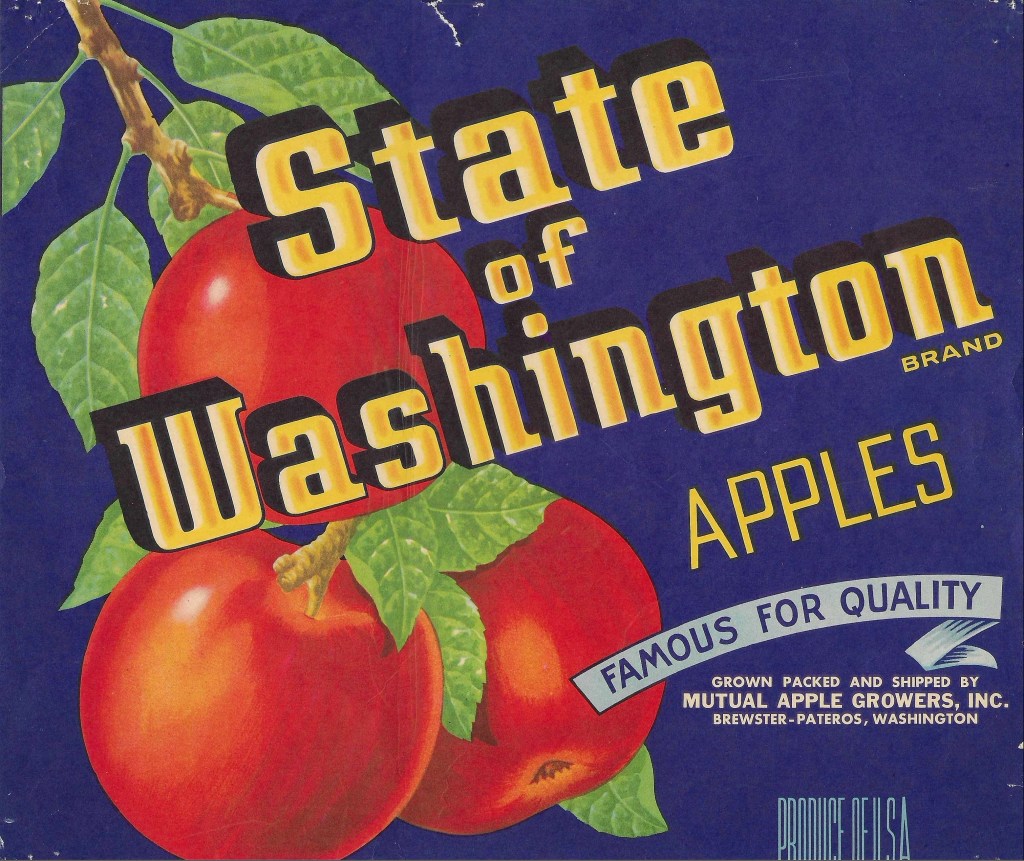
During these changes and mergers of various cooperatives throughout Pateros and north-central Washington, apples were occasionally sold under their former names (e.g., MAGI apples being sold as MAGI even after merging with Trout-Blue Chelan), but these mergers largely ended their unique independence and advertising. For MEPA, their Crisp’N Spicy apple labels are very well known, and the same is true for MAGI. Each had easily recognizable characteristics – a good thing for marketing and advertising apples throughout the U.S.


If you have any suggested revisions or additions, please email: cylerc [at] gmail [dot] com
 Pateros-Methow Apple History